Share Sadayoshi Omoto's obituary with others.
Invite friends and family to read the obituary and add memories.
Stay updated
We'll notify you when service details or new memories are added.
You're now following this obituary
We'll email you when there are updates.
Select your format and elements to print

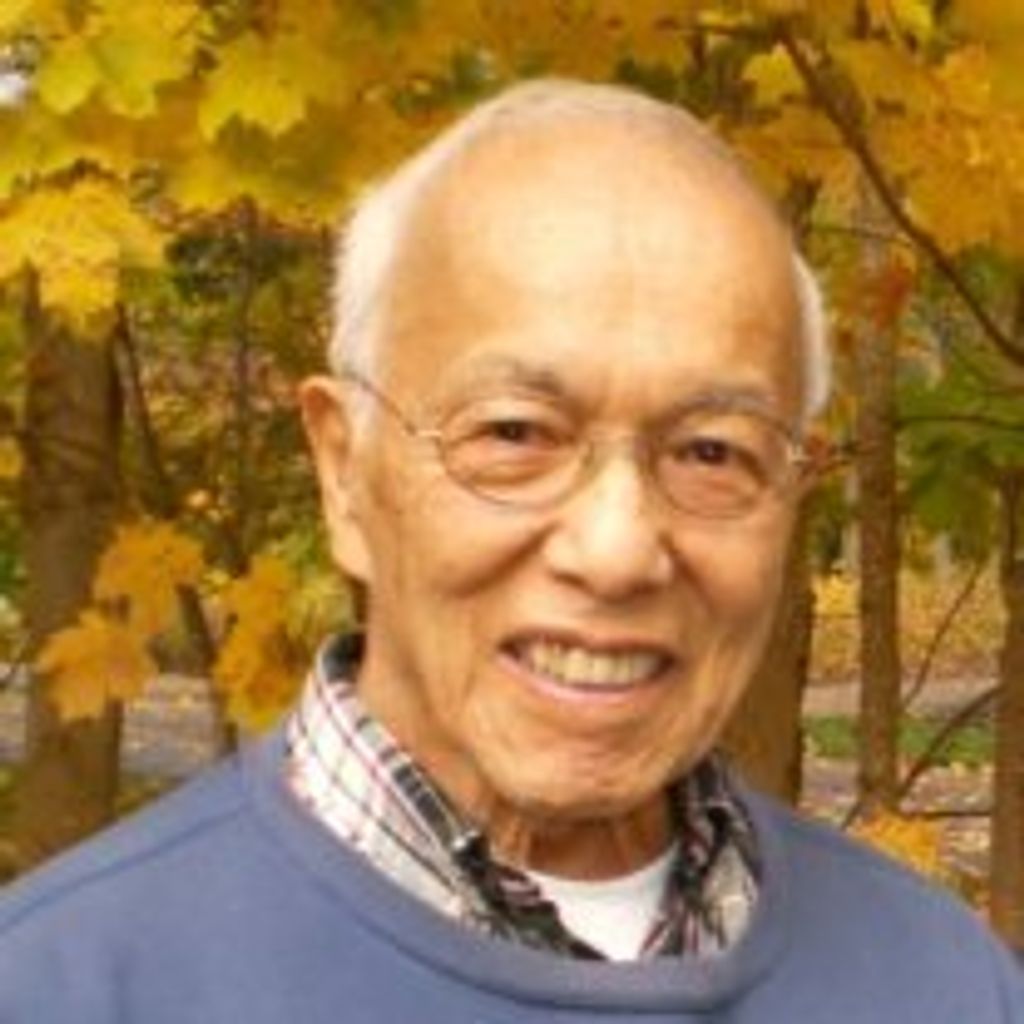
1922
Sadayoshi
2013

Sadayoshi Omoto
Oct 5, 1922 — Mar 4, 2013
Sadayoshi Omoto
October 5, 1922 – March 4, 2013
Sadayoshi "Sada" Omoto died peacefully surrounded by family at Munson Hospice House after a lifetime of inspiring students, artists and friends.
For more than 90 years, Sada's path through life brought him challenges, opportunities and triumphs. He was a beloved husband, father, grandfather, uncle, college professor, elected official, activist and, in later years, artist. His indomitable spirit and easygoing personality made him a friend and role model for many. His individuality and dogged determination emerged early and were defining characteristics throughout his life.
Sada was born at Wing Point on Bainbridge Island, Washington. The island – a short ferry ride from Seattle – was an idyllic spot to grow up. As a boy, Sada picked strawberries for local farmers and indulged his lifelong love of sports. Even in 2013, he recalled the thrill he felt at age 8, watching the exploits of the town baseball team. He still remembered players by name and position.
Sada excelled in school, serving as class president in high school and editor of the school newspaper. He began classes at the University of Washington with hopes of becoming his family's first college graduate – but his life was changed forever the day Japanese forces attacked Pearl Harbor. Soon after, President Roosevelt signed Executive Order 9066 authorizing the U.S. military to relocate U.S. citizens of Japanese ancestry from the West Coast. The first people subject to the evacuation order were Japanese Americans living on Bainbridge Island.
Sada's family and more than 200 other island residents were given just six days to collect what possessions they could carry and make arrangements for their property. On March 30, they were rounded up by U.S. soldiers carrying rifles with bayonets and put on a ferry to Seattle. Ultimately, they became some of the first residents at Manzanar Relocation Center, an internment camp located in a remote area of the Southern California desert.
At Manzanar, Sada lived in a communal barracks with his brother and widowed mother, surrounded by barbed wire, dogs and guard towers, while his two older brothers served in the U.S. military. The experience instilled a keen awareness of social injustice. He later made his forced relocation a "teachable moment" for his children and for hundreds of others who heard him speak or viewed his highly personal art on the subject.
Sada left camp to join the U.S. Army, training as a linguist at the Military Intelligence Service Language School in Minnesota. He made his first journey to Asia while in the military.
After the war, Sada resumed his quest for a higher education – but this time in the Midwest. He enrolled at Oberlin College in Ohio and earned a bachelor's degree. It was at Oberlin that he met his first wife, Eleanor. He also earned a Master's degree from Michigan State University (MSU) and his Ph.D. in art history from The Ohio State University. He received an honorary Bachelor of Arts degree from the University of Washington in 2008, along with other Japanese American students whose studies were interrupted by the internment.
For the next 40 years, Sada pursued an academic career that included teaching courses in American and Asian art and advising and mentoring students – first at Bradley College (Illinois), then at Wayne State University in Detroit, and finally at MSU, where he taught for 33 years. During his career, he served as department chair, as advisor to a minority student organization and as a member of various boards, councils and committees. His concern and attention to principles of justice were remembered by students long after their college careers.
Under the auspices of the Smithsonian Institution's Bicentennial Inventory of American Paintings executed before 1914 program of the National Collection of Fine Arts, Sada directed the inventory of early Michigan paintings. The inventory of over 1,000 works served as the basis for The Michigan Experience exhibition at Kresge Art Center Gallery, MSU, in 1986. The exhibit also traveled to venues throughout the state.
With his young family, Sada became a familiar figure in his suburban community. He helped start a youth sports league and also operated a cottage printing business that produced tickets and programs for local civic groups. He won election to the township board of trustees. Demonstrating fierce independence, Sada many times was the lone dissenter in votes that went contrary to his principles.
After retiring from MSU, Sada returned to the northern Michigan community he had first visited as an art student during the 1950s. In Leland, Sada cultivated a new life focused on creativity and community service. He attended painting classes and helped form a collective of local artists who drew inspiration from the local landscape and each other.
Sada also helped organize exercise classes for seniors and exhibitions of art from the past and present. With his wife, Kathryn, he supported the work of the Leelanau Conservancy and other local historic preservation efforts. Although slowed in recent years, Sada remained a familiar sight at Leland community events, galleries and coffee shops. His gentle humor and easy smile made him a beacon of friendliness in any season.
Sada is survived by his wife, Kathryn Bishop Omoto; children Loren (Susan) Omoto of Maitland, Fla.; Allen Omoto (David Robinson) of Claremont, Calif.; and Katherine (Neal) Fortin of Okemos, Mich.; granddaughter Helen Fortin; sisters-in-law Yukiko Omoto, Nobuko Omoto, Betty Elliott and Susan (Thomas) Kulick; nieces Olivia (William) Sroufe, Karlyne (Larry) Sera and Sarah (Kevin) Vance- Tompkins; and nephews Mark Omoto, Tom Omoto, Dennis (Carole) Omoto, Craig (Sheila) Omoto, Matthew Kulick and Peter Kulick. He was preceded in death by his parents, Daikichi and Masa Omoto; his son, Roger Omoto; his brothers, Setsuo, Taketo and Masakatsu Omoto; and his sister, Kanee Omoto.
A celebration of Sada's life will be held May 24 at 11 A.M. at the Old Art Building (Leelanau Community Cultural Center (111 N. Main St.) in Leland.
Donations in Sada's memory may be made to the following organizations or to a charity of the donor's choice:
- Leelanau Community Cultural Center at the Old Art Building
http://www.oldartbuilding.com/contributions-and-donations/
- The Leelanau Conservancy
http://leelanauconservancy.org/donate/
- Fishtown Preservation Society
http:/ www.fishtownmi.org/donate
- ShareCare of Leelanau
http://www.sharecareleelanau.org
- Bainbridge Island Japanese American Community
http://www.bijac.org/index.php?p=MEMORIALDonations
AT THE REQUEST OF THE FAMILY, PLEASE DO NOT SEND FLOWERS OR GIFTS BY WAY OF THE SYMPATHY STORE - RATHER, THEY FEEL THAT SADA WOULD HAVE BEEN PLEASED TO BE HONORED THROUGH A MEMORIAL CONTRIBUTION TO ONE OF THE CHARITIES MENTIONED ABOVE, OF WHICH HE WAS SO PASSIONATE - OR TO A CHARITY OF YOUR OWN CHOOSING.
October 5, 1922 – March 4, 2013
Sadayoshi "Sada" Omoto died peacefully surrounded by family at Munson Hospice House after a lifetime of inspiring students, artists and friends.
For more than 90 years, Sada's path through life brought him challenges, opportunities and triumphs. He was a beloved husband, father, grandfather, uncle, college professor, elected official, activist and, in later years, artist. His indomitable spirit and easygoing personality made him a friend and role model for many. His individuality and dogged determination emerged early and were defining characteristics throughout his life.
Sada was born at Wing Point on Bainbridge Island, Washington. The island – a short ferry ride from Seattle – was an idyllic spot to grow up. As a boy, Sada picked strawberries for local farmers and indulged his lifelong love of sports. Even in 2013, he recalled the thrill he felt at age 8, watching the exploits of the town baseball team. He still remembered players by name and position.
Sada excelled in school, serving as class president in high school and editor of the school newspaper. He began classes at the University of Washington with hopes of becoming his family's first college graduate – but his life was changed forever the day Japanese forces attacked Pearl Harbor. Soon after, President Roosevelt signed Executive Order 9066 authorizing the U.S. military to relocate U.S. citizens of Japanese ancestry from the West Coast. The first people subject to the evacuation order were Japanese Americans living on Bainbridge Island.
Sada's family and more than 200 other island residents were given just six days to collect what possessions they could carry and make arrangements for their property. On March 30, they were rounded up by U.S. soldiers carrying rifles with bayonets and put on a ferry to Seattle. Ultimately, they became some of the first residents at Manzanar Relocation Center, an internment camp located in a remote area of the Southern California desert.
At Manzanar, Sada lived in a communal barracks with his brother and widowed mother, surrounded by barbed wire, dogs and guard towers, while his two older brothers served in the U.S. military. The experience instilled a keen awareness of social injustice. He later made his forced relocation a "teachable moment" for his children and for hundreds of others who heard him speak or viewed his highly personal art on the subject.
Sada left camp to join the U.S. Army, training as a linguist at the Military Intelligence Service Language School in Minnesota. He made his first journey to Asia while in the military.
After the war, Sada resumed his quest for a higher education – but this time in the Midwest. He enrolled at Oberlin College in Ohio and earned a bachelor's degree. It was at Oberlin that he met his first wife, Eleanor. He also earned a Master's degree from Michigan State University (MSU) and his Ph.D. in art history from The Ohio State University. He received an honorary Bachelor of Arts degree from the University of Washington in 2008, along with other Japanese American students whose studies were interrupted by the internment.
For the next 40 years, Sada pursued an academic career that included teaching courses in American and Asian art and advising and mentoring students – first at Bradley College (Illinois), then at Wayne State University in Detroit, and finally at MSU, where he taught for 33 years. During his career, he served as department chair, as advisor to a minority student organization and as a member of various boards, councils and committees. His concern and attention to principles of justice were remembered by students long after their college careers.
Under the auspices of the Smithsonian Institution's Bicentennial Inventory of American Paintings executed before 1914 program of the National Collection of Fine Arts, Sada directed the inventory of early Michigan paintings. The inventory of over 1,000 works served as the basis for The Michigan Experience exhibition at Kresge Art Center Gallery, MSU, in 1986. The exhibit also traveled to venues throughout the state.
With his young family, Sada became a familiar figure in his suburban community. He helped start a youth sports league and also operated a cottage printing business that produced tickets and programs for local civic groups. He won election to the township board of trustees. Demonstrating fierce independence, Sada many times was the lone dissenter in votes that went contrary to his principles.
After retiring from MSU, Sada returned to the northern Michigan community he had first visited as an art student during the 1950s. In Leland, Sada cultivated a new life focused on creativity and community service. He attended painting classes and helped form a collective of local artists who drew inspiration from the local landscape and each other.
Sada also helped organize exercise classes for seniors and exhibitions of art from the past and present. With his wife, Kathryn, he supported the work of the Leelanau Conservancy and other local historic preservation efforts. Although slowed in recent years, Sada remained a familiar sight at Leland community events, galleries and coffee shops. His gentle humor and easy smile made him a beacon of friendliness in any season.
Sada is survived by his wife, Kathryn Bishop Omoto; children Loren (Susan) Omoto of Maitland, Fla.; Allen Omoto (David Robinson) of Claremont, Calif.; and Katherine (Neal) Fortin of Okemos, Mich.; granddaughter Helen Fortin; sisters-in-law Yukiko Omoto, Nobuko Omoto, Betty Elliott and Susan (Thomas) Kulick; nieces Olivia (William) Sroufe, Karlyne (Larry) Sera and Sarah (Kevin) Vance- Tompkins; and nephews Mark Omoto, Tom Omoto, Dennis (Carole) Omoto, Craig (Sheila) Omoto, Matthew Kulick and Peter Kulick. He was preceded in death by his parents, Daikichi and Masa Omoto; his son, Roger Omoto; his brothers, Setsuo, Taketo and Masakatsu Omoto; and his sister, Kanee Omoto.
A celebration of Sada's life will be held May 24 at 11 A.M. at the Old Art Building (Leelanau Community Cultural Center (111 N. Main St.) in Leland.
Donations in Sada's memory may be made to the following organizations or to a charity of the donor's choice:
- Leelanau Community Cultural Center at the Old Art Building
http://www.oldartbuilding.com/contributions-and-donations/
- The Leelanau Conservancy
http://leelanauconservancy.org/donate/
- Fishtown Preservation Society
http:/ www.fishtownmi.org/donate
- ShareCare of Leelanau
http://www.sharecareleelanau.org
- Bainbridge Island Japanese American Community
http://www.bijac.org/index.php?p=MEMORIALDonations
AT THE REQUEST OF THE FAMILY, PLEASE DO NOT SEND FLOWERS OR GIFTS BY WAY OF THE SYMPATHY STORE - RATHER, THEY FEEL THAT SADA WOULD HAVE BEEN PLEASED TO BE HONORED THROUGH A MEMORIAL CONTRIBUTION TO ONE OF THE CHARITIES MENTIONED ABOVE, OF WHICH HE WAS SO PASSIONATE - OR TO A CHARITY OF YOUR OWN CHOOSING.
Service Schedule
Past Services
Memorial Service
Friday, May 24, 2013
Starts at 11:00 am
Leelanau Community Cultural Center
Guestbook
This site is protected by reCAPTCHA and the
Google Privacy Policy and Terms of Service apply.
Service map data © OpenStreetMap contributors